%20(2).png)
.png)

ENVISOINING
The Art of Seeing Farther
A 13 Day Relational Study of Vision, Relationship, and the Futures We Tend to
A communal study of with Cacao through the wisdom of Tz'ikin and Ancestral Cosomvisions
13 Days,
3 Wisdom Keepers, Cacao,
Community in name of the Living Landscape of Your Life
In collaboration with Cacao Source
Percentage of Proceeds funds our research within our farmers: needs + health + care
September 14- Sepptember 26
8:30 am Guatemalan Time

VISION CHANGES WITH PERSPECTIVE

This 13 day cacao relational study is a deep immersion into vision, possibility, and prosperity through the wisdom of Tz’ikin.
To work with Tz’ikin is to explore how we see our lives and the relationships that shape what becomes possible.
Tz’ikin carries the perspective of the bird. From the ground, we encounter the details of our lives. From above, we begin to perceive the larger landscape, the pathways between things, the patterns taking form, and the possibilities waiting to be recognized.
Vision grows through relationship.
Throughout these 13 days, we work alongside Cacao as a Plant Master and the sacred Cholq’ij calendrical system, allowing cacao to support the heart while the rhythm of time guides our study.
Guided by the trecena of Tz’ikin, we gather as a community to study:
-
vision and perspective
-
prosperity and reciprocity
-
communication and expression
-
possibility and foresight
-
the circulation of gifts and resources
-
the relationships that shape the landscapes of our lives
TZ'IKIN
To walk with Tz’ikin is to study how vision lives within us:
-
through the ways we perceive our lives,
-
through the possibilities we are able to recognize,
-
through our relationship with prosperity and exchange,
-
through the words, messages, and ideas we carry, and through our capacity to see beyond where we currently stand.
Tz’ikin carries the vision of the bird, moving between Earth and Sky, between the intimate detail and the wider landscape.
To walk with Tz’ikin is to study the landscape of our lives and the relationships that shape what becomes possible.
What becomes visible when we change our perspective?
Where is life already opening pathways?
What relationships allow our gifts to circulate?
What are we giving our attention to?
What are we communicating through the way we live?
What kind of prosperity are our relationships creating?


This is a Communal Study
Tz’ikin teaches that vision is relational. What we perceive is shaped by where we stand, what we attend to, and the relationships that surround us.
Through this relational immersion with Cacao, we explore vision as something cultivated through ecology, ancestry, reciprocity, communication, exchange, and possibility.
This is a study of the living landscape of your life.
Our Live Practice
13 consecutive days
-
Daily live sessions (~1 hour)
-
Guided reflection, dialogue, and cacao practice
-
Space for personal journaling and inner listening
-
Communal container held throughout the trecena
-
Guided Practices with water
-
3 Sessions with Wisdom Keepers
This is not a passive program: It is a lived, felt, relational experience.


From our Past Relational Immersions
In the physical realm, this experience ritualized much of my day-to-day practices so it doesn't feel like la Dieta 'ended', rather, continued in more intimate stewardship. In the Spirit realms, my soul now feels rooted with the cosmos, sharing an ancestral vision that I believe will carry my vessel to wherever healing for myself and all relations is needed.
La Dieta del Toj was experienced as a divinely curated and necessary alchemization of my connection with time, matter, and the cosmos (inevitably, myself) - all in reciprocal relationship with Mother Earth, Mama Cacao, and all nations seen and unseen.
I now see cacao completely differently. I always felt it was sacred; but didn't really understand why or how. I am now looking at various resources to integrate the nahuales in my daily practices, and deepen my knowledge about the mayan calendar.
Meet your Guides

Mariana Bandera
Mariana is the founder of Passages, a living Earth School dedicated to bridging ancestral wisdom with contemporary life. Her work is an offering to culture, ceremony, and the sacred connections that unite humanity across generations.

Konradomir
Konradomir is originally from Poland and has spent years studying and walking under the guidance of Tata Tomás as a practitioner and keeper of the sacred Cholq’ij calendar. Through this path, he has dedicated himself to deepening his understanding of Maya cosmology, ceremony, and timekeeping traditions. With humility and devotion, Konradomir shares these teachings as a way of fostering connection, awareness, and right relationship, supporting individuals and communities in remembering their place within the living rhythms of creation.
With Guest Speakers
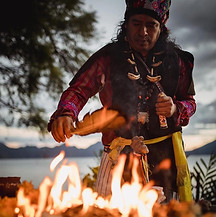
Tata Thomas
Walther Thomas Mendoza Cholotio is a Tz’utujil Maya spiritual guide (Ajq’ij) from San Juan La Laguna, Sololá, Guatemala. Descended from generations of healers and spiritual guides, he was raised within the ceremonial traditions, prophecies, and healing practices of his ancestors. Today, he carries forward this lineage with devotion and service, sharing Maya ancestral wisdom through ceremony, timekeeping, and spiritual guidance. He is also an acupuncturist and practitioner of holistic health, working with medicinal plants and alternative healing modalities.

Nana Lucy Culum
Nana Lucy Culum is a K’iche’ Maya Ajq’ij, traditional comadrona, curandera, and keeper of ancestral healing traditions from Guatemala. Her work is rooted in the wisdom of the womb, ancestral lineage healing, sacred fire, and the understanding of the subtle relationships that connect the living with those who came before. Through her teachings and healing practice, Nana Lucy carries forward knowledge held and transmitted across generations.

Nana Jessica & Tata Jerico
Nana Jessica and Tata Jerico are wisdom keepers from the K’iche’ Maya lineage, rooted in San Juan Sololá, where they serve as respected teachers and pillars of their community. Working in partnership, they carry ancestral knowledge of the Cholq’ij—the sacred Maya calendrical system—and its teachings on the nawales, ceremonial time, and relational cosmology. Their work is deeply grounded in the ancestral use of cacao and corn as living medicines that sustain life, memory, and community continuity.
Our Plant Teacher
From Cacao Source
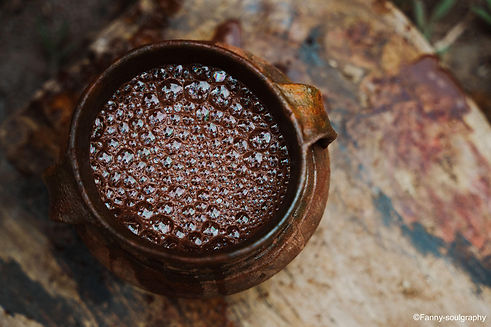
For thousands of years, Cacao has been cultivated, prepared, exchanged, and ritualized throughout Mesoamerica as more than a food source. Within many Indigenous traditions, cacao has been understood as a plant teacher: a living intelligence that accompanies processes of relationship, emotional awareness, reciprocity, community, and remembrance.
Unlike plants associated with force or rupture, cacao often teaches through subtlety. Through softening. Through presence. Through the slow unveiling of what lives within the heart and the relational field around us.
To enter into a "dieta" with cacao is to intentionally deepen relationship with the plant beyond consumption. It is to spend sustained time listening. Observing. Reflecting. Studying how cacao moves through the body, emotions, dreams, patterns, memories, and daily rhythms of life.
During these 13 days guided by the trecena of K’at, cacao becomes a companion for exploring the living web of connection that binds ecology, ancestry, community, labor, spirit, and psyche together. This is not simply a study of cacao itself, but a study of relationship through cacao.

Threads of Reciprocity

Supporting Cacao Para Todos at the Anahuacalli Museum
A portion of proceeds from this relational study will support our team’s journey to Cacao Para Todos at the Anahuacalli Museum in Mexico City.
This gathering brings together cacao growers, makers, educators, practitioners, and communities to share cacao and the many relationships, histories, and forms of knowledge carried through it.
Our team will travel from Guatemala to Mexico carrying cacao from the communities and origins we work alongside, creating an opportunity for these seeds, stories, and relationships to enter into a wider cultural exchange.
This feels especially meaningful within our study of Tz’ikin, where we will explore prosperity, value, communication, exchange, and the ways resources move through relationship.
The proceeds from this study become part of that circulation. They support our team in carrying cacao into this gathering, sharing the relationships behind it, learning from others, and bringing those conversations back into our wider community.
In this way, the study itself participates in the question we are exploring:
How does value move, and what becomes possible when we allow it to circulate through relationship?